
Night waking in 3-10 year olds: How to stop night wakes without tears or 3am negotiations
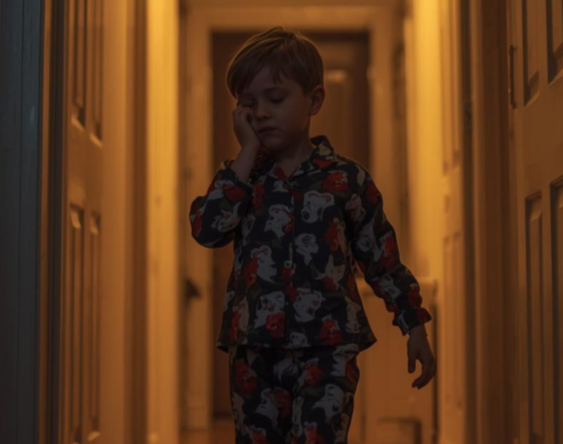
If your 4, 6 or 8 year old is suddenly waking every night and padding into your room at 2am like a tiny sleep-deprived ghost, you’re definitely not alone.
Night waking in 3–10 year olds is one of those things nobody really prepares you for. We talk so much about baby sleep that we assume by the time they’re in school, it should all be sorted. And then suddenly you’re googling “why is my 5 year old waking at night again?” at 1:47am.
First of all, you haven’t failed. And your child isn’t broken.
Night waking in older children is common. It often shows up alongside big developmental leaps, starting school, friendship wobbles, house moves, new siblings, or just a growing imagination that suddenly makes the dark feel different. Sometimes it’s anxiety. Sometimes it’s habit. Sometimes it’s simply that they’ve never fully learnt how to fall back asleep on their own.
The good news? You can stop night waking, but it will take calm consistency.
I know that’s easier said than done when you’re exhausted, so let’s go through this properly.
Why is my child waking every night?
If your child is waking every night, the most common causes in 3–10 year olds are:
Falling asleep with a parent present
Needing help to settle at the start of the night
Big emotions stored up from the day
Bedtime being too early or too late
Inconsistent responses to night wakes
So let’s get into this in more detail.
How your child falls asleep determines night wakes
If your child falls asleep with you lying next to them, holding their hand, sitting on their bed, or reading a story until their eyes close, then when they naturally wake in the night (which we all do), they will believe that they need you back there to help them go back to sleep.
Night waking reduces when children learn to fall asleep independently at the start of the night. That doesn’t mean shutting the door and waiting for them to cry themselves to sleep; it means gently teaching the skill using one of these methods:
Gradual Retreat – slowly moving further away every few nights.
Checking In – leaving for short periods but returning predictably.
There isn’t a “best” sleep training method for 3–10 year olds. The best one is the one you know you can stay consistent with.
How special time before bed can reduce night waking
This is the bit most parents skip, and can often be the missing piece.
Bedtime is usually the only time of day your child gets your full attention. So they stretch it out. And if they don’t feel like they’ve had enough at bedtime, they’ll come looking for you at 2am.
That’s why I recommend 10 minutes of child-led “special time” at the beginning of the bedtime routine:
No teaching.
No correcting.
No phones.
Just you following their lead.
Check out my free downloadable Guide to Special Time if you’d like some ideas on how to implement this in your house.
Is bedtime too early or too late?
If your child is:
Chatting for an hour before sleeping
Taking ages to settle
Seems to get a second wind before bed
The timing of their bedtime could be wrong, and this could be causing more wake ups.
Children usually have a natural “sleep window” in the evening when their bodies are ready to fall asleep. This happens when melatonin (the hormone that helps us sleep) starts to rise. Research measuring children’s melatonin levels shows that bedtime typically works best when it happens shortly after this rise in melatonin. If bedtime is much earlier or later than this biological window, children may struggle to settle or may wake more during the night.
Rather than a “perfect bedtime,” children usually have a biological sleep window where sleep is easiest.
For many children this window tends to fall somewhere around:
Age Common Sleep Window
3–5 years ~7:00–8:30pm
6–10 years ~7:30–9:00pm
You can check my blog post about average sleep times for children by age to see whether your child’s bedtime could be causing the wakes.
What to do when your child wakes at night
When your child wakes in the night, the most helpful response is calm, predictable and consistent. If your reaction changes each time - sometimes a cuddle, sometimes a long chat, sometimes getting into their bed - children often keep waking because there’s always a chance the interaction might be interesting.
Using a short and consistent response helps make night wakes boring.
Some parents find it helpful to use a simple script like:
"It’s night time. You’re safe. I love you. Back to sleep."
Keep your voice calm and avoid long conversations. It can feel repetitive at first, but when children realise that the outcome is always the same, night wakes usually become shorter and less frequent.
You can download my free Bedtime Scripts to help you respond calmly and consistently to night wakes.
When your child comes into your bed at night
A very common version of night waking is when a child wakes and comes straight into their parents’ bed. Often, this is the easiest way for everyone to get the best sleep, and if you’re all getting good sleep, then there is absolutely no reason to stop.
But if you'd like your child to sleep in their own bed, the key is to gently return them to their room each time they wake. Keep the interaction brief and predictable, and guide them back to bed using the same calm response each time.
I know this sounds a lot easier said than done, but honestly, with consistency, it really does work. You just need to make sure you’re prepared for a few tough nights of a lot of back and forth. If you start without preparing yourself, you’re much more likely to give in rather than stick with it.
If your child often ends up in your bed overnight and you're not sure whether to continue co-sleeping or make changes, you might find this guide on co-sleeping with older children helpful.
“But my child gets really upset at night when I try to get them to go back to bed…”
This is so normal and I honestly understand why this is the hardest part of all of this - I’ve been there! It’s really tough. It’s also the reason why most parents give up - because they either assume their child is upset because they’re doing something wrong or because their child isn’t ready.
The thing is, when you change how you respond to night waking, it’s developmentally normal for your child to test the boundary. It’s really important to know that the big emotions are a sign that your child is learning a new skill.
The biggest mindset shift that helped me was realising that it’s not our job to remove all the upset or stop the emotions. Instead, it’s to stay calm and caring while they figure out this new normal.
Sit beside them.
Show them you understand.
Offer brief reassurance.
Cuddle.
…But always return to the boundary.
Loving boundaries = security for kids.
Signs your child is ready to sleep through the night
Many parents worry that their child might not be ready to sleep through the night yet. In most cases, children aged 3–10 are physically capable of sleeping through the night, but they may still need help learning how to settle themselves when they wake.
Some signs your child is ready to sleep through the night include:
They can fall asleep within 10–15 minutes at bedtime
They no longer nap during the day
They can follow simple bedtime routines
They settle again with reassurance rather than needing long interactions
If your child shows these signs but is still waking frequently, the issue is usually related to sleep habits rather than a developmental limitation or something physiological.
With consistent routines and calm responses during the night, most children can learn to sleep through the night.
Why night waking sometimes gets worse before it gets better
When parents begin changing bedtime habits or night responses, it’s very common for night waking to increase for a few days. This happens because children are testing whether the new boundary is real. If they have previously been able to get extra cuddles, conversation or time in your bed, they may try harder at first to see if the old response will return.
Sleep specialists often call this an “extinction burst.”
Although it can feel really discouraging in the moment, this stage is usually temporary. If you respond calmly and consistently, most children quickly realise that night time interactions are no longer exciting, and the waking reduces.
How long does it take to stop night waking?
When you consistently change how your child falls asleep and how you respond overnight, you’ll usually see this pattern:
First few nights: More attempts
Then: Shorter wakes
Then: Fewer wakes
Then: Staying in bed
Some children improve in days, whereas some take a few weeks.
When should I speak to a GP about night waking?
Most night waking in children aged 3-10 is linked to sleep habits and improves once you put consistent routines and responses in place. But if you’ve been making changes for around six weeks and things still aren’t improving, it can be worth having a chat with your GP to rule out anything else going on. Things like loud snoring, mouth breathing, frequent night sweats, or your child seeming very tired during the day can sometimes point to underlying issues such as enlarged tonsils, allergies, sleep apnoea or recurring ear infections. It’s not the most common cause of night waking, but it’s always worth checking if something doesn’t feel quite right.
Sleep can also sometimes be more challenging for children who are neurodivergent, as differences in sensory processing or regulation can make settling and staying asleep harder. This doesn’t mean that night waking always points to neurodiversity, but if sleep difficulties are happening alongside ongoing concerns raised by school, it may be helpful to have a chat with your GP to explore whether any additional support might be useful.
How to start fixing night waking tonight
If you’re exhausted and need a simple starting point:
Add 10 minutes of special time before bed.
Check bedtime isn’t too early or too late
Choose one sleep coaching method.
Decide your night wakes script in advance.
Commit to three consistent weeks (not three nights!).
And if you’d like someone to help you problem solve with as you go along, or just to help you stay focused on the end goal, please feel free to book a free call to chat more about how I can help. There is never any pressure to book anything more.
Final thought: Independent sleep builds confidence
I think the biggest worry parents have with helping their 5, 7 or 9 year old sleep through the night is that the methods will push their child away and damage their connection.
But I’ve worked with so many families who say their connection increased after going through this process. When children learn to fall asleep independently, everyone sleeps better, which means calmer mornings, better moods, and a stronger connection during the day.
And that’s the real goal for me.
Further reading & resources
LeBourgeois et al., 2013 — Circadian phase & sleep timing in toddlers
Akacem et al., 2016 — Evening light & circadian clock in preschoolers
Adams et al., 2020 — Earlier sleep onset & longer night sleep in children
American Academy of Sleep Medicine — Child sleep duration health advisory
Night waking in children: Frequently asked questions
-
Sometimes a child can fall asleep independently, but their wakes are due to wanting more connection or may have just become a bit of a habit. In this case, introducing special time at the beginning of the night along with a consistent response for the night wakes can make all the difference.
-
If parents respond consistently, improvements can sometimes be seen within a few days, but it is more common for changes to take 2–3 weeks. The first few nights can sometimes involve more waking as children test the new boundaries. Staying calm and predictable usually leads to shorter wakes and fewer wake-ups over time.
-
Yes. Night waking is still very common in school-aged children. At this age it can be triggered by developmental changes, starting school, worries, overtiredness, habit, or needing reassurance during the night. While occasional waking is normal, frequent night waking can usually be improved by adjusting bedtime routines, sleep timing, and how parents respond during the night.