
How to stop co-sleeping with a 3–10 year old (gently & confidently)
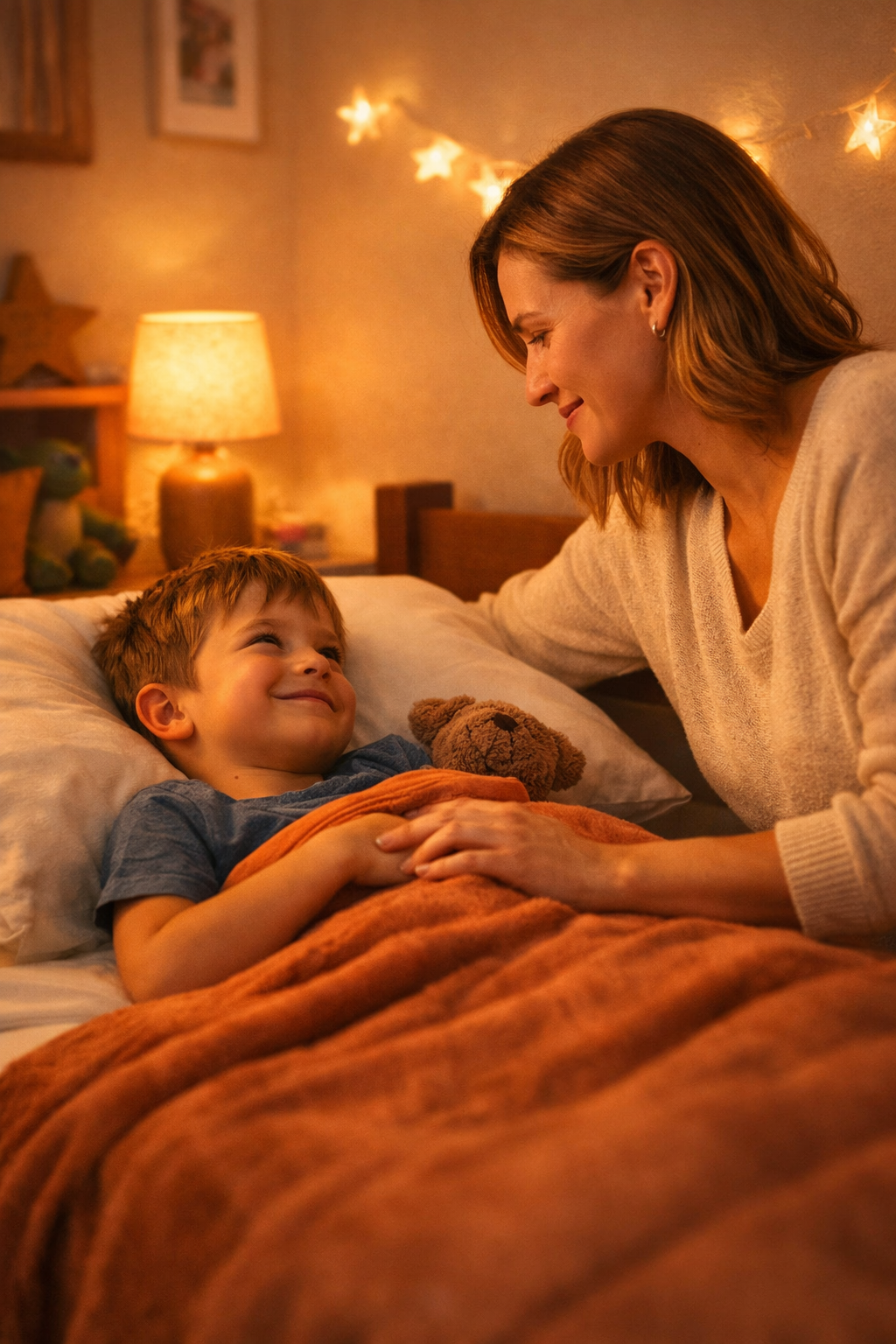
If you’re here, I’m going to assume either:
You chose co-sleeping because it felt right for your family, but it’s not working anymore.
Or you’ve fallen into co-sleeping unintentionally.
Maybe it started during a regression. Maybe after a nightmare. Maybe during a move, illness, or just because it felt easier at the time.
And now?
You’re sleeping in a tiny kids bed next to a 4, 6 or 8 year old octopus and you’re wondering how this became your life.
First things first:
Co-sleeping with a big kid is not wrong - in some cultures, it’s completely normal. But if it’s no longer working for your family, you’re allowed to change it.
This isn’t about forcing independence. It’s about teaching a skill. And sleeping alone at 5, 7 or 9 years old is a skill.
Is it normal for older children to co-sleep?
Yes. Very.
With babies, co-sleeping is often about feeding or survival. With older children, it’s usually about:
Emotional reassurance
Habit
Anxiety at bedtime
Fear of the dark
Wanting connection
Not yet having the confidence to fall asleep alone
By age 3+, sleep becomes much more psychological than biological. It’s less about wake windows and hunger, and more about confidence, routine, and boundaries.
So if your child says:
“I’m scared.”
“I just want you.”
“I can’t sleep without you.”
That’s not manipulation. That’s a child who hasn’t yet learned how to settle independently. And the great thing is, it can be taught.
When is it time to stop co-sleeping?
Only when you feel ready.
Not because your mother-in-law commented.
Not because a well-meaning friend said they shouldn’t still be in your bed.
Not because Instagram told you it’s wrong.
The right time is when:
You’re exhausted.
Your evenings are disappearing.
Your relationship is being affected.
You feel resentful.
You know your child is capable of more.
Confidence really matters here, though. Kids are incredibly tuned into doubt. If you feel unsure, they will too.
Why big kids struggle to sleep alone
This is where a lot of advice goes wrong.
We expect a 6 year old to “just know” how to sleep alone. But sleeping independently is like swimming. You wouldn’t throw a child in a pool and expect them to swim confidently without practice. They need arm bands first. They need gradual exposure. They need you nearby while they build the skill.
If your child:
Needs you lying beside them to fall asleep
Comes into your bed every night
Wakes and calls for you
Takes hours to settle
It usually means they believe they need you nearby to fall asleep.
And when they wake between sleep cycles (which everyone does), they believe they need you back again to help them get back to sleep. So they call out or come to find you.
The gentle way to stop co-sleeping (for kids aged 3–10)
It doesn’t involve cry-it-out.
It doesn’t involve locking doors.
It doesn’t involve emotional withdrawal.
This is gradual confidence building.
Step 1: Prepare before you change anything
Before you even think about moving out of their bed, make sure:
You’re giving 10 minutes of fully focused 1:1 attention daily. I have a downloadable guide to Special Time if you’d like any ideas about how to build this into your day.
The bedtime routine is consistent and predictable. Check out this bedtime routine blog if you need some help with this.
The room environment is calm (dim lighting, no screens)
They’re actually sleepy enough at bedtime. Check my guide to how much sleep children need by age if you’re unsure.
You’ve talked through the change in advance and practised what it’s going to look like
This last point is really key because preparation massively reduces resistance. Most parents skip this and then assume the method isn’t working.
With big kids, this can’t feel like something that’s being done to them.
Before you start, talk about what’s changing and why. Keep it positive and simple. Offer small choices (where you’ll sit, who will come and check on them, the order of the routine) so they feel some ownership.
Step 2: Choose a gradual transition method
For big kids, I recommend one of two approaches:
Option 1: Gradually retreating and moving away in stages
This is what I would suggest for kids that have never slept alone or are particularly anxious
Option 2: A checking-In method where you pop in and out
This works well for school-aged children who can stay in bed but want reassurance.
What about night wakings?
Here’s the really important part: If they still fall asleep with you there, night wakes will continue. Falling asleep independently at bedtime is the foundation.
For night wakes:
Keep responses short.
Keep your tone warm.
Use the same script every time.
No debates at 2am.
For example:
“It’s night time. You’re safe. Back to bed.”
Consistency makes the interaction boring. Predictable responses reduce waking over time.
It’s important to know that the first few nights are usually worse. That doesn’t mean it’s not working. It means your child is checking whether the boundary is real. This is the hardest part, but the most important part to show them you feel confident they can do this.
If you’d like extra support with what to say in the moment, you can download my Free Big Kid Bedtime Scripts. It includes calm, confidence-building phrases for night wakings, call-backs, and returning your child to bed without escalating emotions.
“But I feel guilty.”
This is completely normal and just shows you care.
But teaching your 5, 6 or 8 year old to sleep independently is not rejection, it’s skill-building. You’re not removing the connection. You’re moving connection to earlier in the evening through special time, playfulness, and routine.
Independence at night builds:
Confidence
Better quality sleep
Emotional resilience
A sense of capability
And yes, a great side product is that it also gives you your evenings back.
How long does it take?
For big kids:
Initial resistance: 3–5 nights
Noticeable improvement: 1–2 weeks
Solid independence: 3-4 weeks of consistency
If you give in halfway through, you accidentally teach:
“If I push long enough, it changes.”
That’s not your child manipulating you. That’s learning. So it’s really important to make sure you’re committed before you start.
Final thoughts
If your child is 7 and still in your bed - you haven’t failed.
If your 9 year old needs you to lie with them - they’re not broken.
They just haven’t practised this skill yet. And skills can be learned at any age.
If you’d like a structured, step-by-step plan specifically for 3–10 year olds, including scripts, troubleshooting, and emotional preparation, you can download my full Easing away from co-sleeping guide here.
Or, if you’d rather have personalised support, you can book a consultation and we’ll build a plan that works for your child’s temperament.
You don’t have to choose between connection and independence.
You can build both.
Co-sleeping frequently asked questions
-
No. If handled calmly and confidently, teaching your child to sleep in their own bed does not damage attachment. In fact, secure attachment is what allows children to develop independence.
-
There isn’t a universal age. Some families happily co-sleep long term. Others decide it’s time when sleep quality drops, night wakings increase, or parents feel exhausted. The right time is when both the parent and child are emotionally ready for change.
-
Temporary co-sleeping during transitions is very common. Once life settles, you can gently guide your child back to their own bed using gradual steps. Big changes often require a little extra reassurance at first.
-
Yes, but planning helps. You may need staggered bedtimes or temporary arrangements while you focus on one child’s sleep skills. Many siblings sleep through more than parents expect.